
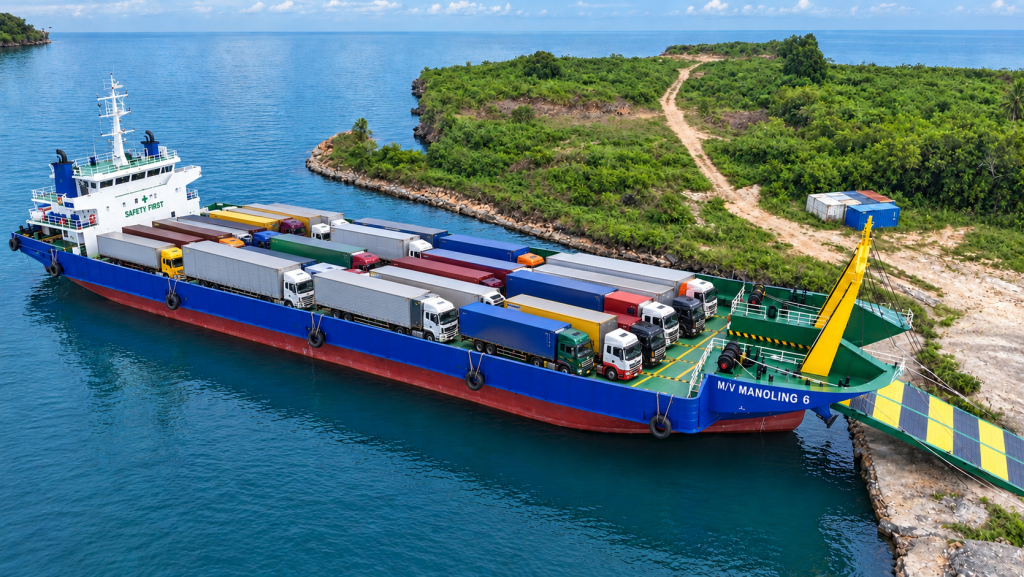
IPO to support fleet and shipyard investments as Visayas RoRo traffic is projected to outpace national growth through 2028
Cebu-based shipping operator Aznar Shipping Corp. (“Aznar Shipping” or the “Company”) has filed its registration statement with the Securities and Exchange Commission (SEC) for an initial public offering (IPO) of up to 1,000,000,000 primary common shares, with an over-allotment option of up to 100,000,000 secondary common shares, subject to regulatory approvals.
The shares will be offered at an indicative price of up to P0.67 per common share, subject to a book-building process. At the maximum indicative offer price, the primary offer is expected to raise up to P670 million in gross proceeds, while the secondary shares under the over-allotment option may add up to approximately P67 million, assuming the option is fully exercised.
“Aznar Shipping’s IPO gives investors an opportunity to participate in the growth of the Visayas through an expanding inter-island shipping platform that supports trade, tourism, and everyday mobility across the region’s key growth centers,” said Mr. Kyle Alexander C. Aznar, President and CEO.
The IPO proceeds are intended to be used for capital expenditure on fleet expansion, shipyard facility development, and general corporate purposes, supporting the Company’s strategy to increase capacity and widen its operational footprint across the Visayas.
“As economic activity across the Visayas continues to grow, we want Aznar Shipping to grow with the region. The additional capital will help us strengthen our fleet and supporting capabilities so we can connect more growth centers and provide the maritime capacity needed to move more passengers, vehicles, and cargoes,” Mr. Aznar added.
The Company’s expansion comes amid sustained maritime activities across the Visayas. Based on a study by the Center for Research and Communication (CRC), the region serves as a critical domestic cargo hub linking the Luzon and Mindanao trade corridors. From 2022 to 2025, Visayas ports accounted for approximately 35% of national cargo throughput, 60% of passenger traffic, 49% of roll-on/roll-off (RoRo) vehicle movements, and more than half of total ship calls nationwide.
The CRC study further projects Visayas RoRo traffic to grow at an average rate of approximately 12.9% through 2028, faster than the projected national RoRo growth rate of approximately 10.7%, reflecting continued demand for inter-island movement of goods, vehicles, and passengers.
Aznar Shipping operates a short-haul, high-frequency shipping model with nine operating vessels focused on four major inter-island routes with regular port calls at eight ports across the Visayas. The Company’s expansion strategy is anchored on increasing vessel capacity, developing additional viable routes, and strengthening the supporting capabilities needed to operate a larger regional shipping platform.
The Company has engaged Investment & Capital Corporation of the Philippines and PNB Capital and Investment Corporation as Joint Issue Managers, Joint Lead Underwriters, and Joint Bookrunners for the transaction.
Subject to regulatory approvals and market conditions, the indicative offer period is scheduled from December 1 to December 8, 2026, with listing targeted for December 18, 2026 on the Small, Medium and Emerging (SME) Board of The Philippine Stock Exchange Inc. (PSE) under the trading symbol “ALX.”
Aznar Shipping is enrolled in the PSE’s Listing Engagement and Assistance Program (LEAP), a handholding initiative of the Exchange that provides potential listing applicants with a one-stop shop for guidance and support throughout the listing process.
About Aznar Shipping Corp.
Aznar Shipping Corp. is a regional shipping company that operates roll-on/roll-off vessels and landing craft tanks serving major islands in the Visayas. It currently serves four (4) major inter-island routes connecting Cebu, Leyte, Bantayan Island, and Negros Occidental provinces, with regular port calls at eight (8) ports. It serves regular shippers, truckers, logistics companies, bus transport operators, construction companies, forwarding services, and regular passengers, supporting the movement of people and goods across the region.